The Death of the Clean Desk
The Death of the Clean Desk
Why your messy workspace might be more productive than their pristine showroom.
Why your messy workspace might be more productive than their pristine showroom.
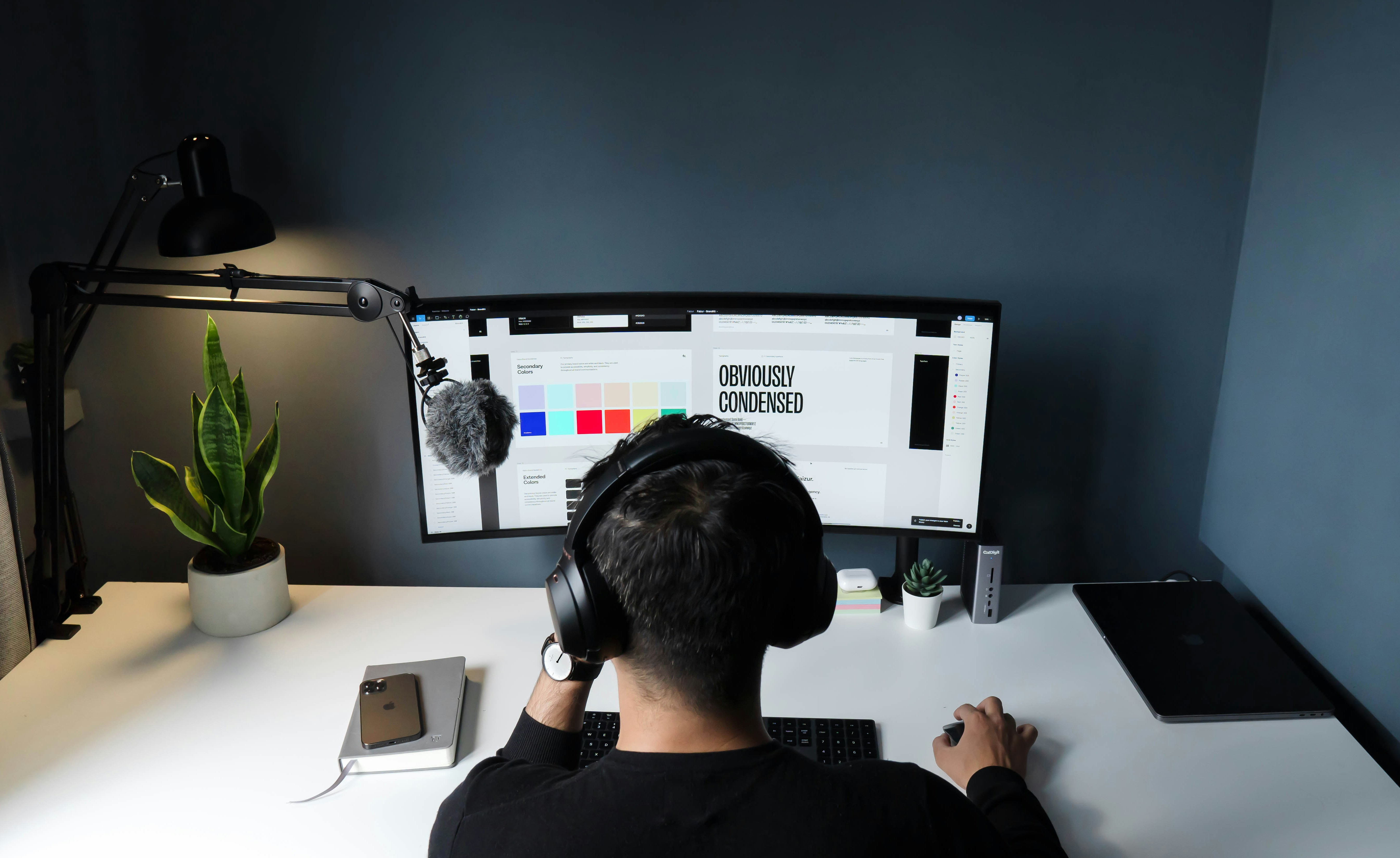
Open Instagram. Search "designer workspace."
You'll see the same desk 10,000 times:
Empty white surface. Single MacBook centred precisely. Maybe a succulent. Definitely a Dieter Rams shelf in the background. Everything monochrome. Everything minimal. Everything utterly lifeless.
And everyone's lying.
That desk looks that way for exactly as long as it takes to photograph it. Then the real work begins, and the real mess accumulates.
Why Minimalism Is a Performance
The pristine workspace aesthetic isn't about productivity. It's about Instagram likes.
Actual creative work is physical. Messy. Tactile.
You're comparing paper stocks. Suddenly you've got 40 swatches spread across your desk. Different weights. Different finishes. You need to see them together, touch them, hold them up to light.
You're exploring type. Printed specimens everywhere. That Grotesk feels different at A3 scale versus on screen. You need the physical reference.
You're developing a colour palette. Pantone books open. Paint chips scattered. Fabric samples pinned to the wall. Digital colours lie. Physical materials tell the truth.
Clean desk = no work happening.
The Research Backs the Mess
University of Minnesota study (2013) found people working in messy environments generated more creative ideas than those in tidy spaces.
Why? Because visual disorder signals permission to think differently. A sterile environment subconsciously enforces conformity.
Physical objects trigger associative thinking. That colour swatch reminds you of a project from three years ago. That sketch on your wall sparks a new direction. Random connections happen when materials surround you.
Tidiness optimises for efficiency. Creativity requires inefficiency.
What Belongs on a Working Desk
Forget minimalism. Here's what actually helps:
Physical references. Books you're currently using. Not decorative spines you've never opened, but dog-eared volumes with sticky notes.
Work in progress. Sketches. Print tests. Failed versions. Seeing evolution helps you understand where to go next.
Material samples. Paper, fabric, finishes. Whatever your discipline works with physically. Digital previews don't cut it.
Inspirational clutter. That postcard. That found object. That weird typeface specimen. Things that make you think differently.
Tools you actually use. Not a carefully curated pen collection. The three markers that have run out but you keep anyway. The craft knife with the wonky blade. The tools with history.
The Real Workspace
Paul Rand's desk was famously chaotic. Massimo Vignelli's studio was immaculate. Both produced brilliant work.
The point isn't mess versus order. It's authenticity versus performance.
Your workspace should reflect your process, not someone else's aesthetic.
If you genuinely think better in minimal environments, brilliant. But if you're clearing your desk for the photograph whilst your creative materials live in drawers, you're optimising for the wrong metric.
The best workspace is the one where actual work happens.
Not the one that looks best on social media.
Open Instagram. Search "designer workspace."
You'll see the same desk 10,000 times:
Empty white surface. Single MacBook centred precisely. Maybe a succulent. Definitely a Dieter Rams shelf in the background. Everything monochrome. Everything minimal. Everything utterly lifeless.
And everyone's lying.
That desk looks that way for exactly as long as it takes to photograph it. Then the real work begins, and the real mess accumulates.
Why Minimalism Is a Performance
The pristine workspace aesthetic isn't about productivity. It's about Instagram likes.
Actual creative work is physical. Messy. Tactile.
You're comparing paper stocks. Suddenly you've got 40 swatches spread across your desk. Different weights. Different finishes. You need to see them together, touch them, hold them up to light.
You're exploring type. Printed specimens everywhere. That Grotesk feels different at A3 scale versus on screen. You need the physical reference.
You're developing a colour palette. Pantone books open. Paint chips scattered. Fabric samples pinned to the wall. Digital colours lie. Physical materials tell the truth.
Clean desk = no work happening.
The Research Backs the Mess
University of Minnesota study (2013) found people working in messy environments generated more creative ideas than those in tidy spaces.
Why? Because visual disorder signals permission to think differently. A sterile environment subconsciously enforces conformity.
Physical objects trigger associative thinking. That colour swatch reminds you of a project from three years ago. That sketch on your wall sparks a new direction. Random connections happen when materials surround you.
Tidiness optimises for efficiency. Creativity requires inefficiency.
What Belongs on a Working Desk
Forget minimalism. Here's what actually helps:
Physical references. Books you're currently using. Not decorative spines you've never opened, but dog-eared volumes with sticky notes.
Work in progress. Sketches. Print tests. Failed versions. Seeing evolution helps you understand where to go next.
Material samples. Paper, fabric, finishes. Whatever your discipline works with physically. Digital previews don't cut it.
Inspirational clutter. That postcard. That found object. That weird typeface specimen. Things that make you think differently.
Tools you actually use. Not a carefully curated pen collection. The three markers that have run out but you keep anyway. The craft knife with the wonky blade. The tools with history.
The Real Workspace
Paul Rand's desk was famously chaotic. Massimo Vignelli's studio was immaculate. Both produced brilliant work.
The point isn't mess versus order. It's authenticity versus performance.
Your workspace should reflect your process, not someone else's aesthetic.
If you genuinely think better in minimal environments, brilliant. But if you're clearing your desk for the photograph whilst your creative materials live in drawers, you're optimising for the wrong metric.
The best workspace is the one where actual work happens.
Not the one that looks best on social media.