The Return of the Mascot
The Return of the Mascot
Why brands are betting on characters, creatures, and icons to cut through an automated world.
Why brands are betting on characters, creatures, and icons to cut through an automated world.
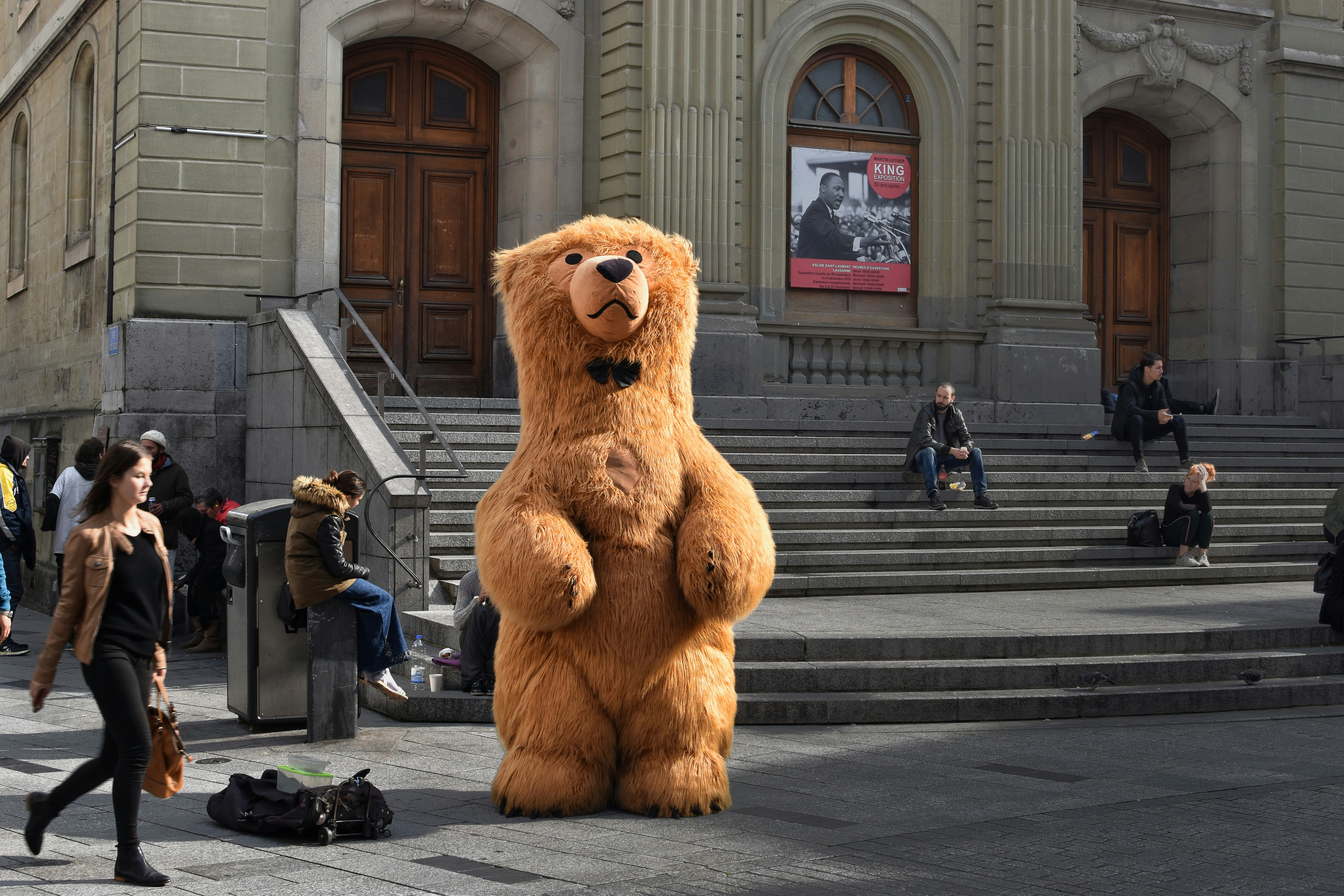
Duo is having a moment.
The small green owl that sits at the centre of Duolingo's brand identity has become, improbably, one of the most recognisable and culturally potent characters in modern marketing. He guilt-trips users about missed lessons. He crashes celebrity events. He dies dramatically on social media when the company's stock dips. He has fans. Real ones. People who don't even use the app follow him for entertainment.
This is not what brand mascots were supposed to become. The received wisdom for the better part of two decades was that mascots were relics. Artefacts of a pre-digital era when brands needed a friendly face on a cereal box to catch a child's eye in a supermarket aisle. Sophisticated brands, the thinking went, didn't need characters. They had aesthetics. They had values. They had carefully considered typographic systems and muted colour palettes.
And then, quietly at first and now with considerable momentum, the mascots came back.
Where They Went and Why They Left
To understand why mascots are returning, it helps to understand why they disappeared.
The early 2000s brought a wave of brand modernisation that swept characters off packaging, out of advertising, and away from visual identities at remarkable speed. Tony the Tiger became less prominent. The Michelin Man was refined into near-abstraction. Ronald McDonald was quietly retired from frontline duty. The logic was consistent across every category. Mascots felt childish. They undermined the aspiration brands were trying to project. A character implied simplicity, and simplicity implied a lack of sophistication.
Minimalism became the lingua franca of serious brands.
Simultaneously, the rise of digital marketing created new priorities. Performance metrics. Conversion rates. Click-through data. The discipline of brand building shifted toward measurable short-term returns, and mascots, whose value accrues slowly through emotional association rather than immediate conversion, looked like an expensive luxury that couldn't be justified in a spreadsheet.
The result was a decade of brands that looked increasingly similar, communicated increasingly similarly, and struggled increasingly to build the kind of emotional connection that turns customers into advocates.
What Actually Changed
The reversal didn't happen because marketers suddenly rediscovered their fondness for anthropomorphised animals. It happened because the landscape shifted in ways that made the mascot's core properties newly valuable.
Automation changed the texture of digital interaction. Chatbots, algorithmic feeds, personalisation engines, AI-generated content. The internet became simultaneously more responsive and less human. Every interaction felt optimised. Nothing felt spontaneous. The warmth that used to come from a person behind a brand, a founder's story, an identifiable human voice, was increasingly absent.
Into that absence, a well-constructed character fits perfectly.
A mascot is inherently human in its logic even when it isn't human in its form. It has personality. It makes decisions. It reacts. It can be funny, irreverent, vulnerable, or bold in ways that a brand's official communications never can. It provides what designers and strategists call a human anchor, a consistent point of emotional contact that doesn't feel like it was generated by an algorithm even when the content around it increasingly is.
At the same time, social media created a new environment in which characters could exist and develop in ways that simply weren't possible on a cereal box. Duo doesn't just appear in Duolingo's advertising. He has an arc. A personality that evolves. Relationships with other characters. A running commentary on current events. He behaves less like a brand asset and more like a cast member.
The Luxury Dimension
Perhaps the most surprising development in the mascot's return is where it has appeared at the top of the market.
Luxury fashion, historically the most mascot-resistant category in branding, has begun to embrace characters and icons with notable enthusiasm. Loewe's recent campaigns have featured a cast of surreal, almost totemic figures. Vivienne Westwood's orb, never quite a mascot in the traditional sense but functioning in a similar way, has become one of the most potent symbols in British fashion. Bottega Veneta has its intrecciato weave pattern, which operates as a kind of non-figurative mascot, instantly recognisable, deeply associated with the brand's values, present across every product and communication.
What luxury understood, perhaps before anyone else, is that icons provide stability.
In a category defined by seasonal reinvention, where everything changes every six months, an enduring symbol provides continuity. It gives the customer something to anchor to across decades of shifting aesthetics and creative directors. It says: whatever else changes, this is what we are.
The Burberry equestrian knight. The Hermès horse and carriage. The Lacoste crocodile. These aren't decorative. They are the brand's oldest and most reliable communicators, and the houses that have maintained them most consistently are, not coincidentally, the ones with the most durable customer relationships.
The Psychology Behind the Connection
There is a substantial body of research explaining why characters produce stronger emotional responses than abstract brand identities, and it comes down to a cognitive mechanism called anthropomorphisation.
The human brain is wired to find faces and personalities in the world around it. We see faces in clouds, in car grilles, in electrical sockets. We assign personality to objects, to weather, to the behaviour of software. This tendency is so deeply embedded that it operates automatically, below the level of conscious thought.
When a brand gives us a character, it is working with that tendency rather than against it.
The character becomes a vessel for the brand's personality in a way that a logo or a colour palette simply cannot replicate. We form parasocial relationships with characters in ways we never form with visual identities. We feel affection for them, loyalty to them, sometimes genuine grief when they're retired or changed beyond recognition. The public reaction to the redesign of the Tropicana packaging in 2009, which removed its iconic straw-in-orange image, resulted in a customer backlash so significant that the company reversed the decision within two months and absorbed a reported $35 million in losses.
That is not a rational response to a packaging change. It is an emotional response to the loss of something that felt familiar, trusted, and in some sense alive.
Building a Mascot That Actually Works
Not every character succeeds. For every Duo there are dozens of forgettable brand characters that cost significant money to develop and produced no measurable emotional return. The difference between the ones that work and the ones that don't is rarely about the quality of the illustration.
It's about whether the character has been given permission to have a real personality.
The mascots that fail are the ones held too tightly by their brand guidelines. Every interaction is approved. Every response is on-message. Every piece of content goes through three rounds of legal review. The result is a character that looks like a person but communicates like a press release.
The mascots that succeed are the ones given enough creative latitude to feel genuinely spontaneous. Duo works because Duolingo's social team was allowed to make him threatening, absurd, self-aware, and occasionally genuinely funny. He is allowed to be surprising. And surprise, in a media environment saturated with optimised, predictable content, is extraordinarily valuable.
The practical implications for brands considering a mascot-led strategy are significant. The creative design of the character itself, its proportions, its expressiveness, its capacity for a range of emotions, matters enormously. A character designed purely for static use on packaging will not translate to the animated, reactive, multi-platform existence that modern mascots need to inhabit. The brief has to start with where the character will live, not what it will look like.
What This Means for Brand Strategy Today
The return of the mascot is not a nostalgic trend. It is a rational strategic response to a specific set of conditions that define the current media landscape.
Audiences are saturated with content. Algorithmic distribution means that emotionally neutral material is increasingly invisible. Trust in institutions, in corporations, in faceless brands, is at a generational low. And the thing that cuts through all of that, consistently, across categories and demographics, is a character that feels real.
This is not a small insight. It has significant implications for how brands allocate their creative investment.
A well-developed mascot is not a campaign. It is infrastructure. It is a long-term asset that appreciates in value as recognition builds, as the character develops depth, and as the audience's emotional investment compounds over time. The brands that understood this earliest, Duolingo, Mailchimp with its Freddie the chimp icon, the entire Michelin universe, are now sitting on brand assets worth considerably more than the visual identities of competitors who chose abstraction over character.
For any brand serious about building lasting emotional equity, in any category, at any price point, the question is no longer whether a character-led approach is appropriate. It is whether the brand has the creative courage and strategic patience to build one properly.
The Simplest Truth About All of This
People don't form emotional bonds with hexadecimal colour codes. They don't feel loyalty toward kerning decisions or grid systems. They connect with characters. They always have.
The brands that forgot that spent a decade looking sophisticated and feeling distant.
The ones remembering it now are building something that lasts.
Duo is having a moment.
The small green owl that sits at the centre of Duolingo's brand identity has become, improbably, one of the most recognisable and culturally potent characters in modern marketing. He guilt-trips users about missed lessons. He crashes celebrity events. He dies dramatically on social media when the company's stock dips. He has fans. Real ones. People who don't even use the app follow him for entertainment.
This is not what brand mascots were supposed to become. The received wisdom for the better part of two decades was that mascots were relics. Artefacts of a pre-digital era when brands needed a friendly face on a cereal box to catch a child's eye in a supermarket aisle. Sophisticated brands, the thinking went, didn't need characters. They had aesthetics. They had values. They had carefully considered typographic systems and muted colour palettes.
And then, quietly at first and now with considerable momentum, the mascots came back.
Where They Went and Why They Left
To understand why mascots are returning, it helps to understand why they disappeared.
The early 2000s brought a wave of brand modernisation that swept characters off packaging, out of advertising, and away from visual identities at remarkable speed. Tony the Tiger became less prominent. The Michelin Man was refined into near-abstraction. Ronald McDonald was quietly retired from frontline duty. The logic was consistent across every category. Mascots felt childish. They undermined the aspiration brands were trying to project. A character implied simplicity, and simplicity implied a lack of sophistication.
Minimalism became the lingua franca of serious brands.
Simultaneously, the rise of digital marketing created new priorities. Performance metrics. Conversion rates. Click-through data. The discipline of brand building shifted toward measurable short-term returns, and mascots, whose value accrues slowly through emotional association rather than immediate conversion, looked like an expensive luxury that couldn't be justified in a spreadsheet.
The result was a decade of brands that looked increasingly similar, communicated increasingly similarly, and struggled increasingly to build the kind of emotional connection that turns customers into advocates.
What Actually Changed
The reversal didn't happen because marketers suddenly rediscovered their fondness for anthropomorphised animals. It happened because the landscape shifted in ways that made the mascot's core properties newly valuable.
Automation changed the texture of digital interaction. Chatbots, algorithmic feeds, personalisation engines, AI-generated content. The internet became simultaneously more responsive and less human. Every interaction felt optimised. Nothing felt spontaneous. The warmth that used to come from a person behind a brand, a founder's story, an identifiable human voice, was increasingly absent.
Into that absence, a well-constructed character fits perfectly.
A mascot is inherently human in its logic even when it isn't human in its form. It has personality. It makes decisions. It reacts. It can be funny, irreverent, vulnerable, or bold in ways that a brand's official communications never can. It provides what designers and strategists call a human anchor, a consistent point of emotional contact that doesn't feel like it was generated by an algorithm even when the content around it increasingly is.
At the same time, social media created a new environment in which characters could exist and develop in ways that simply weren't possible on a cereal box. Duo doesn't just appear in Duolingo's advertising. He has an arc. A personality that evolves. Relationships with other characters. A running commentary on current events. He behaves less like a brand asset and more like a cast member.
The Luxury Dimension
Perhaps the most surprising development in the mascot's return is where it has appeared at the top of the market.
Luxury fashion, historically the most mascot-resistant category in branding, has begun to embrace characters and icons with notable enthusiasm. Loewe's recent campaigns have featured a cast of surreal, almost totemic figures. Vivienne Westwood's orb, never quite a mascot in the traditional sense but functioning in a similar way, has become one of the most potent symbols in British fashion. Bottega Veneta has its intrecciato weave pattern, which operates as a kind of non-figurative mascot, instantly recognisable, deeply associated with the brand's values, present across every product and communication.
What luxury understood, perhaps before anyone else, is that icons provide stability.
In a category defined by seasonal reinvention, where everything changes every six months, an enduring symbol provides continuity. It gives the customer something to anchor to across decades of shifting aesthetics and creative directors. It says: whatever else changes, this is what we are.
The Burberry equestrian knight. The Hermès horse and carriage. The Lacoste crocodile. These aren't decorative. They are the brand's oldest and most reliable communicators, and the houses that have maintained them most consistently are, not coincidentally, the ones with the most durable customer relationships.
The Psychology Behind the Connection
There is a substantial body of research explaining why characters produce stronger emotional responses than abstract brand identities, and it comes down to a cognitive mechanism called anthropomorphisation.
The human brain is wired to find faces and personalities in the world around it. We see faces in clouds, in car grilles, in electrical sockets. We assign personality to objects, to weather, to the behaviour of software. This tendency is so deeply embedded that it operates automatically, below the level of conscious thought.
When a brand gives us a character, it is working with that tendency rather than against it.
The character becomes a vessel for the brand's personality in a way that a logo or a colour palette simply cannot replicate. We form parasocial relationships with characters in ways we never form with visual identities. We feel affection for them, loyalty to them, sometimes genuine grief when they're retired or changed beyond recognition. The public reaction to the redesign of the Tropicana packaging in 2009, which removed its iconic straw-in-orange image, resulted in a customer backlash so significant that the company reversed the decision within two months and absorbed a reported $35 million in losses.
That is not a rational response to a packaging change. It is an emotional response to the loss of something that felt familiar, trusted, and in some sense alive.
Building a Mascot That Actually Works
Not every character succeeds. For every Duo there are dozens of forgettable brand characters that cost significant money to develop and produced no measurable emotional return. The difference between the ones that work and the ones that don't is rarely about the quality of the illustration.
It's about whether the character has been given permission to have a real personality.
The mascots that fail are the ones held too tightly by their brand guidelines. Every interaction is approved. Every response is on-message. Every piece of content goes through three rounds of legal review. The result is a character that looks like a person but communicates like a press release.
The mascots that succeed are the ones given enough creative latitude to feel genuinely spontaneous. Duo works because Duolingo's social team was allowed to make him threatening, absurd, self-aware, and occasionally genuinely funny. He is allowed to be surprising. And surprise, in a media environment saturated with optimised, predictable content, is extraordinarily valuable.
The practical implications for brands considering a mascot-led strategy are significant. The creative design of the character itself, its proportions, its expressiveness, its capacity for a range of emotions, matters enormously. A character designed purely for static use on packaging will not translate to the animated, reactive, multi-platform existence that modern mascots need to inhabit. The brief has to start with where the character will live, not what it will look like.
What This Means for Brand Strategy Today
The return of the mascot is not a nostalgic trend. It is a rational strategic response to a specific set of conditions that define the current media landscape.
Audiences are saturated with content. Algorithmic distribution means that emotionally neutral material is increasingly invisible. Trust in institutions, in corporations, in faceless brands, is at a generational low. And the thing that cuts through all of that, consistently, across categories and demographics, is a character that feels real.
This is not a small insight. It has significant implications for how brands allocate their creative investment.
A well-developed mascot is not a campaign. It is infrastructure. It is a long-term asset that appreciates in value as recognition builds, as the character develops depth, and as the audience's emotional investment compounds over time. The brands that understood this earliest, Duolingo, Mailchimp with its Freddie the chimp icon, the entire Michelin universe, are now sitting on brand assets worth considerably more than the visual identities of competitors who chose abstraction over character.
For any brand serious about building lasting emotional equity, in any category, at any price point, the question is no longer whether a character-led approach is appropriate. It is whether the brand has the creative courage and strategic patience to build one properly.
The Simplest Truth About All of This
People don't form emotional bonds with hexadecimal colour codes. They don't feel loyalty toward kerning decisions or grid systems. They connect with characters. They always have.
The brands that forgot that spent a decade looking sophisticated and feeling distant.
The ones remembering it now are building something that lasts.