The Return of 3D Realism: Why Flat Design is Finally Dead
The Return of 3D Realism: Why Flat Design is Finally Dead
For a decade, we worshipped at the altar of flat design. Clean. Simple. Two-dimensional. Now, the brands that look premium are the ones adding depth, texture, and realism back into digital spaces.
For a decade, we worshipped at the altar of flat design. Clean. Simple. Two-dimensional. Now, the brands that look premium are the ones adding depth, texture, and realism back into digital spaces.
Here's what happened to web design over the last 15 years.
In 2013, Apple released iOS 7. Flat design. No skeuomorphism. No shadows. No gradients. Just clean shapes and solid colours.
The entire industry followed. Websites became flatter. Interfaces became simpler. Depth disappeared. Everything was two-dimensional.
And for a while, it worked. Flat design was faster to load, easier to scale, and felt modern compared to the glossy, textured interfaces of the early 2000s.
But then it became boring.
Every website looked the same. Every app used the same visual language. Flat shapes. Sans-serif type. Plenty of white space. Functionally sound. Visually forgettable.
Now, the pendulum is swinging back. Not all the way to skeuomorphism, but towards something new: digital luxury through hyper-realistic 3D.
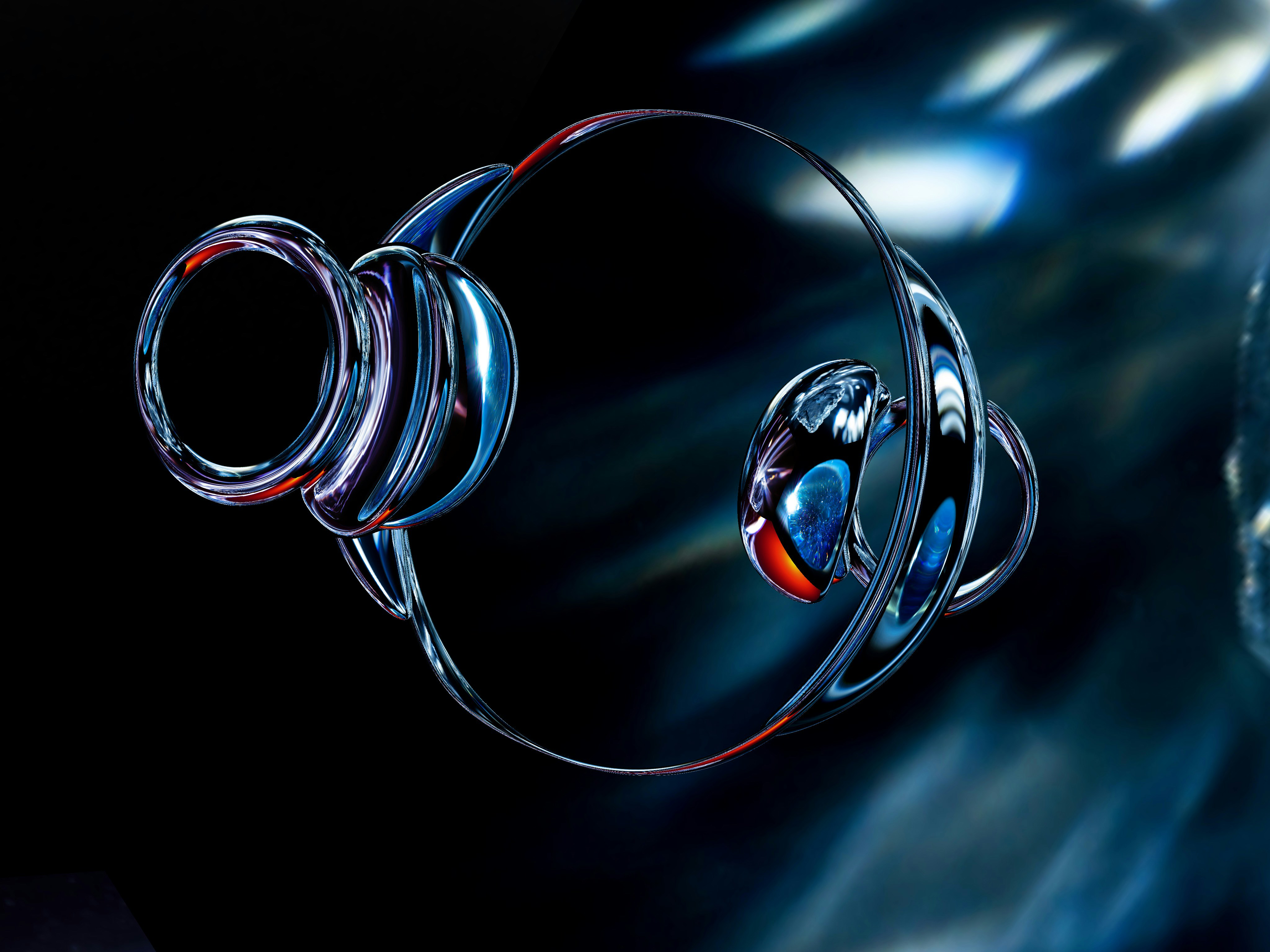
Glass textures. Metallic finishes. Depth and shadow. Reflections and refraction. Web design that doesn't just communicate information, it creates atmosphere.
And the brands using it? They look expensive. Premium. Like they invested in craft, not just templates.
Why Flat Design Stopped Working
Let's talk about what killed flat design's dominance.
First, ubiquity bred indifference. When every brand looks clean, minimal, and flat, no one stands out. You're not differentiated. You're just another website.
Second, technology caught up. In 2013, 3D rendering in the browser was slow, clunky, and limited. Now? WebGL, Three.js, and modern GPUs make real-time 3D not just possible, but performant.
Third, luxury expectations evolved. Consumers, especially in premium categories, stopped equating "simple" with "premium." Simple became associated with cheap. Generic. Lazy.
Luxury, in 2026, is about craft. Detail. The kind of visual richness that signals someone spent time, money, and expertise making this look and feel exceptional.
Flat design can't deliver that. 3D realism can.
What Digital Luxury Actually Looks Like
Let's define what we're talking about.
This isn't a return to early-2000s skeuomorphism. We're not putting fake leather textures on calendar apps or making buttons look like physical objects.
This is hyper-realistic 3D used strategically to create depth, sophistication, and tactility in digital spaces.
Glass morphism. Interfaces that look like frosted glass. Translucent. Layered. Light passes through elements. Shadows suggest depth. It feels premium without being heavy.
Metallic textures. Brushed aluminium. Polished chrome. Soft gold. These materials signal quality. They're tactile. They catch light. They feel expensive.
Liquid gradients. Not flat colour transitions. Gradients that feel three-dimensional. Like light moving through gel or liquid. Organic. Sophisticated.
Dimensional typography. Letters that exist in space. That cast shadows. That have weight and volume. Type that feels carved, not typed.
The goal: make digital spaces feel less like websites and more like environments.
How Apple Led the Way (Again)
Let's talk about who reintroduced this.
Apple's recent product pages are masterclasses in 3D realism. Look at the iPhone or MacBook launches.
The products aren't just photographed. They're rendered in hyper-realistic 3D. You can see reflections. Shadows that respond to scroll. Materials that look tangible. Glass that catches light realistically.
It's not just beautiful. It's functional.
You understand the product better because you can see it from every angle. The depth communicates premium quality. The realism makes you want to reach through the screen and touch it.
And critically, it differentiates Apple from competitors who are still using flat product shots on flat backgrounds.
The Luxury Market: Where This is Essential
Let's talk about where 3D realism matters most.
Fashion and beauty. These brands sell aspiration. Flat design doesn't inspire. But a website where products float in space, where glass bottles refract light, where textures feel real? That creates desire.
Dior's recent web redesigns incorporate 3D product renders that respond to mouse movement. The bottle tilts. Light shifts. You see the depth of the glass, the weight of the packaging. It feels luxurious before you even read the description.
Automotive. Car brands were early adopters. Configurators where you rotate the vehicle, change colours, see reflections on the paint. This isn't new, but it's getting more sophisticated.
Porsche's configurator doesn't just show you the car. It shows you the car in realistic lighting, with accurate material rendering. The leather looks like leather. The carbon fibre has texture. You're not looking at a flat image. You're looking at a simulation of the real thing.
Watches and jewellery. Products where detail matters. Where craftsmanship is the selling point. Flat photography can't capture that. 3D realism can.
Rolex uses 3D models that let you examine every detail. The bracelet. The dial. The finishing. You can zoom in further than any photograph would allow. And it all looks real.
Technology and consumer electronics. Products that are designed objects. Where industrial design is a differentiator.
Samsung, Sony, Dyson, they're all using hyper-realistic 3D to showcase products in ways that flat design never could.
The Dubai Approach: Maximalism in 3D
Now let's talk about how this plays in the UAE.
Dubai doesn't do subtle. The architecture is bold. The retail experiences are theatrical. And digital design is following suit.
Luxury brands operating in Dubai are using 3D realism aggressively.
E-commerce sites where products aren't just displayed, they're staged. Floating in dimensional space. Lit dramatically. Reflections visible. Textures tangible.
Real estate websites where you don't just see photos of properties. You navigate 3D renderings. You walk through spaces. You see how light moves through rooms at different times of day.
This works here because the market expects spectacle.
A flat, minimal website in the Gulf luxury market doesn't signal sophistication. It signals budget constraints. Premium brands need to look like they invested in their digital presence, and 3D realism is how you demonstrate that.
The London Approach: Restraint with Depth
Now contrast with the UK.
British design culture values intelligence and restraint. 3D realism works here, but it has to be justified. Purposeful. Not just spectacle for spectacle's sake.
The best London-based brands use 3D subtly.
A product floats slightly off the page. Just enough depth to create interest. Shadows are soft, not dramatic. The realism enhances the experience without overwhelming it.
Aesop's website uses 3D product renders, but they're not flashy. The bottles sit in dimensional space. Light is natural. Shadows are gentle. It's premium without being performative.
This is the British interpretation of digital luxury: rich, but not loud.
The Technical Side: How This is Built
Let's talk about how 3D realism actually gets implemented.
Three.js is the foundation for most of this work. It's a JavaScript library that makes WebGL accessible. You can render 3D objects, control lighting, add textures, and create interactive experiences.
Blender and Cinema 4D are where the 3D models get created. Products are modelled with realistic materials, textures, and lighting. Then exported for web use.
Spline has made 3D design more accessible. It's a browser-based 3D tool that integrates directly with web design workflows. Designers can create and iterate on 3D elements without needing a full 3D artist.
Real-time rendering is what makes this performant. GPUs handle the heavy lifting. The 3D renders smoothly at 60fps on modern devices. It's no longer a luxury reserved for high-end desktop experiences.
The challenge isn't building it anymore. It's knowing when and how to use it effectively.
When to Use 3D Realism (and When Not To)
Let's be clear about where this works.
Use 3D realism when:
Your product is a physical object that benefits from being seen in detail. Luxury goods. Tech products. Fashion. Automotive.
Your brand positioning is premium and you need to differentiate from competitors using flat design.
Your website is product-focused and the 3D enhances understanding, not just aesthetics.
Don't use 3D realism when:
Your brand is about speed, simplicity, or accessibility. 3D adds complexity. If your value proposition is "easy," don't make the interface feel heavy.
Your content is information-dense. 3D works for hero sections and product showcases. It doesn't work for text-heavy pages or complex data.
Your audience is on slow connections or low-powered devices. 3D is more performant than it used to be, but it's still heavier than flat design.
Glass Morphism: The Gateway Drug
If you're not ready for full 3D product renders, start with glass morphism.
This is the softest entry point into dimensional design. It's not full 3D, but it creates depth through layering, transparency, and blur.
Here's how it works:
Background elements are visible through translucent foreground elements. Blur creates separation. Borders are subtle, often light or semi-transparent. Shadows are soft, suggesting depth without being heavy.
It works brilliantly for UI elements. Cards. Navigation. Modals. Anything that needs to sit "above" the page without using harsh shadows or borders.
Apple uses this in macOS and iOS. Microsoft uses it in Windows 11. It's become a standard for modern interfaces because it creates depth without the performance cost of full 3D rendering.
And it looks expensive. Premium. Thoughtful.
How This Plays Out in Practice
Let's look at brands doing this exceptionally well.
Stripe's latest website uses subtle 3D elements. Floating UI components. Soft shadows. Dimensional cards that respond to scroll. It's not aggressive, but it creates depth that makes the site feel modern and premium.
BMW's configurator lets you customise vehicles in hyper-realistic 3D. Change the colour, the wheels, the interior. Every material is rendered accurately. You see exactly what you're getting. It reduces purchase hesitation because the visualisation is so close to reality.
YSL Beauty's website uses 3D product renders that respond to mouse movement. The lipstick tilts. Light reflects off the gold casing. You see the texture of the cap. It's not just informative, it's desire-inducing.
These aren't tech demos. They're strategic decisions to use 3D realism to differentiate, communicate quality, and create experiences that flat design can't match.
The DARB Edge
We don't add 3D because it's trendy. We add it when it solves a problem flat design can't.
Whether you're showcasing physical products, building a luxury digital experience, or differentiating in a crowded market, we use dimensional design to create depth, tactility, and premium positioning.
We know when to go full 3D and when glass morphism is enough. We know how to balance spectacle with performance. And we know how to make digital spaces feel like environments, not just websites.
Because in 2026, flat isn't modern anymore. It's just flat. And the brands that look premium are the ones adding depth back into the experience.
Ready to make your digital presence feel premium? Let's bring dimension back into your brand. Get in touch with DARB.
Here's what happened to web design over the last 15 years.
In 2013, Apple released iOS 7. Flat design. No skeuomorphism. No shadows. No gradients. Just clean shapes and solid colours.
The entire industry followed. Websites became flatter. Interfaces became simpler. Depth disappeared. Everything was two-dimensional.
And for a while, it worked. Flat design was faster to load, easier to scale, and felt modern compared to the glossy, textured interfaces of the early 2000s.
But then it became boring.
Every website looked the same. Every app used the same visual language. Flat shapes. Sans-serif type. Plenty of white space. Functionally sound. Visually forgettable.
Now, the pendulum is swinging back. Not all the way to skeuomorphism, but towards something new: digital luxury through hyper-realistic 3D.
Glass textures. Metallic finishes. Depth and shadow. Reflections and refraction. Web design that doesn't just communicate information, it creates atmosphere.
And the brands using it? They look expensive. Premium. Like they invested in craft, not just templates.
Why Flat Design Stopped Working
Let's talk about what killed flat design's dominance.
First, ubiquity bred indifference. When every brand looks clean, minimal, and flat, no one stands out. You're not differentiated. You're just another website.
Second, technology caught up. In 2013, 3D rendering in the browser was slow, clunky, and limited. Now? WebGL, Three.js, and modern GPUs make real-time 3D not just possible, but performant.
Third, luxury expectations evolved. Consumers, especially in premium categories, stopped equating "simple" with "premium." Simple became associated with cheap. Generic. Lazy.
Luxury, in 2026, is about craft. Detail. The kind of visual richness that signals someone spent time, money, and expertise making this look and feel exceptional.
Flat design can't deliver that. 3D realism can.
What Digital Luxury Actually Looks Like
Let's define what we're talking about.
This isn't a return to early-2000s skeuomorphism. We're not putting fake leather textures on calendar apps or making buttons look like physical objects.
This is hyper-realistic 3D used strategically to create depth, sophistication, and tactility in digital spaces.
Glass morphism. Interfaces that look like frosted glass. Translucent. Layered. Light passes through elements. Shadows suggest depth. It feels premium without being heavy.
Metallic textures. Brushed aluminium. Polished chrome. Soft gold. These materials signal quality. They're tactile. They catch light. They feel expensive.
Liquid gradients. Not flat colour transitions. Gradients that feel three-dimensional. Like light moving through gel or liquid. Organic. Sophisticated.
Dimensional typography. Letters that exist in space. That cast shadows. That have weight and volume. Type that feels carved, not typed.
The goal: make digital spaces feel less like websites and more like environments.
How Apple Led the Way (Again)
Let's talk about who reintroduced this.
Apple's recent product pages are masterclasses in 3D realism. Look at the iPhone or MacBook launches.
The products aren't just photographed. They're rendered in hyper-realistic 3D. You can see reflections. Shadows that respond to scroll. Materials that look tangible. Glass that catches light realistically.
It's not just beautiful. It's functional.
You understand the product better because you can see it from every angle. The depth communicates premium quality. The realism makes you want to reach through the screen and touch it.
And critically, it differentiates Apple from competitors who are still using flat product shots on flat backgrounds.
The Luxury Market: Where This is Essential
Let's talk about where 3D realism matters most.
Fashion and beauty. These brands sell aspiration. Flat design doesn't inspire. But a website where products float in space, where glass bottles refract light, where textures feel real? That creates desire.
Dior's recent web redesigns incorporate 3D product renders that respond to mouse movement. The bottle tilts. Light shifts. You see the depth of the glass, the weight of the packaging. It feels luxurious before you even read the description.
Automotive. Car brands were early adopters. Configurators where you rotate the vehicle, change colours, see reflections on the paint. This isn't new, but it's getting more sophisticated.
Porsche's configurator doesn't just show you the car. It shows you the car in realistic lighting, with accurate material rendering. The leather looks like leather. The carbon fibre has texture. You're not looking at a flat image. You're looking at a simulation of the real thing.
Watches and jewellery. Products where detail matters. Where craftsmanship is the selling point. Flat photography can't capture that. 3D realism can.
Rolex uses 3D models that let you examine every detail. The bracelet. The dial. The finishing. You can zoom in further than any photograph would allow. And it all looks real.
Technology and consumer electronics. Products that are designed objects. Where industrial design is a differentiator.
Samsung, Sony, Dyson, they're all using hyper-realistic 3D to showcase products in ways that flat design never could.
The Dubai Approach: Maximalism in 3D
Now let's talk about how this plays in the UAE.
Dubai doesn't do subtle. The architecture is bold. The retail experiences are theatrical. And digital design is following suit.
Luxury brands operating in Dubai are using 3D realism aggressively.
E-commerce sites where products aren't just displayed, they're staged. Floating in dimensional space. Lit dramatically. Reflections visible. Textures tangible.
Real estate websites where you don't just see photos of properties. You navigate 3D renderings. You walk through spaces. You see how light moves through rooms at different times of day.
This works here because the market expects spectacle.
A flat, minimal website in the Gulf luxury market doesn't signal sophistication. It signals budget constraints. Premium brands need to look like they invested in their digital presence, and 3D realism is how you demonstrate that.
The London Approach: Restraint with Depth
Now contrast with the UK.
British design culture values intelligence and restraint. 3D realism works here, but it has to be justified. Purposeful. Not just spectacle for spectacle's sake.
The best London-based brands use 3D subtly.
A product floats slightly off the page. Just enough depth to create interest. Shadows are soft, not dramatic. The realism enhances the experience without overwhelming it.
Aesop's website uses 3D product renders, but they're not flashy. The bottles sit in dimensional space. Light is natural. Shadows are gentle. It's premium without being performative.
This is the British interpretation of digital luxury: rich, but not loud.
The Technical Side: How This is Built
Let's talk about how 3D realism actually gets implemented.
Three.js is the foundation for most of this work. It's a JavaScript library that makes WebGL accessible. You can render 3D objects, control lighting, add textures, and create interactive experiences.
Blender and Cinema 4D are where the 3D models get created. Products are modelled with realistic materials, textures, and lighting. Then exported for web use.
Spline has made 3D design more accessible. It's a browser-based 3D tool that integrates directly with web design workflows. Designers can create and iterate on 3D elements without needing a full 3D artist.
Real-time rendering is what makes this performant. GPUs handle the heavy lifting. The 3D renders smoothly at 60fps on modern devices. It's no longer a luxury reserved for high-end desktop experiences.
The challenge isn't building it anymore. It's knowing when and how to use it effectively.
When to Use 3D Realism (and When Not To)
Let's be clear about where this works.
Use 3D realism when:
Your product is a physical object that benefits from being seen in detail. Luxury goods. Tech products. Fashion. Automotive.
Your brand positioning is premium and you need to differentiate from competitors using flat design.
Your website is product-focused and the 3D enhances understanding, not just aesthetics.
Don't use 3D realism when:
Your brand is about speed, simplicity, or accessibility. 3D adds complexity. If your value proposition is "easy," don't make the interface feel heavy.
Your content is information-dense. 3D works for hero sections and product showcases. It doesn't work for text-heavy pages or complex data.
Your audience is on slow connections or low-powered devices. 3D is more performant than it used to be, but it's still heavier than flat design.
Glass Morphism: The Gateway Drug
If you're not ready for full 3D product renders, start with glass morphism.
This is the softest entry point into dimensional design. It's not full 3D, but it creates depth through layering, transparency, and blur.
Here's how it works:
Background elements are visible through translucent foreground elements. Blur creates separation. Borders are subtle, often light or semi-transparent. Shadows are soft, suggesting depth without being heavy.
It works brilliantly for UI elements. Cards. Navigation. Modals. Anything that needs to sit "above" the page without using harsh shadows or borders.
Apple uses this in macOS and iOS. Microsoft uses it in Windows 11. It's become a standard for modern interfaces because it creates depth without the performance cost of full 3D rendering.
And it looks expensive. Premium. Thoughtful.
How This Plays Out in Practice
Let's look at brands doing this exceptionally well.
Stripe's latest website uses subtle 3D elements. Floating UI components. Soft shadows. Dimensional cards that respond to scroll. It's not aggressive, but it creates depth that makes the site feel modern and premium.
BMW's configurator lets you customise vehicles in hyper-realistic 3D. Change the colour, the wheels, the interior. Every material is rendered accurately. You see exactly what you're getting. It reduces purchase hesitation because the visualisation is so close to reality.
YSL Beauty's website uses 3D product renders that respond to mouse movement. The lipstick tilts. Light reflects off the gold casing. You see the texture of the cap. It's not just informative, it's desire-inducing.
These aren't tech demos. They're strategic decisions to use 3D realism to differentiate, communicate quality, and create experiences that flat design can't match.
The DARB Edge
We don't add 3D because it's trendy. We add it when it solves a problem flat design can't.
Whether you're showcasing physical products, building a luxury digital experience, or differentiating in a crowded market, we use dimensional design to create depth, tactility, and premium positioning.
We know when to go full 3D and when glass morphism is enough. We know how to balance spectacle with performance. And we know how to make digital spaces feel like environments, not just websites.
Because in 2026, flat isn't modern anymore. It's just flat. And the brands that look premium are the ones adding depth back into the experience.
Ready to make your digital presence feel premium? Let's bring dimension back into your brand. Get in touch with DARB.