Why Vinyl, Film Photography, and Risograph Printing Are Making a Comeback
Why Vinyl, Film Photography, and Risograph Printing Are Making a Comeback
How physical media is thriving in the digital age, and what it means for creative work
How physical media is thriving in the digital age, and what it means for creative work
Something strange is happening in creative industries.
Whilst AI generates perfect images in seconds and digital tools promise infinite efficiency, designers are buying film cameras. Photographers are shooting on expired Kodak stock. Print studios are installing 1980s risograph machines.
This isn't nostalgia. It's a deliberate choice.
And understanding why requires looking at what digital abundance actually did to creative work.
The Numbers: What's Actually Growing
Let's start with data, not assumptions.
Vinyl Records
UK vinyl sales (BPI/ERA data):
2015: 2.1 million units
2020: 4.8 million units
2023: 5.9 million units
2024: 6.1 million units
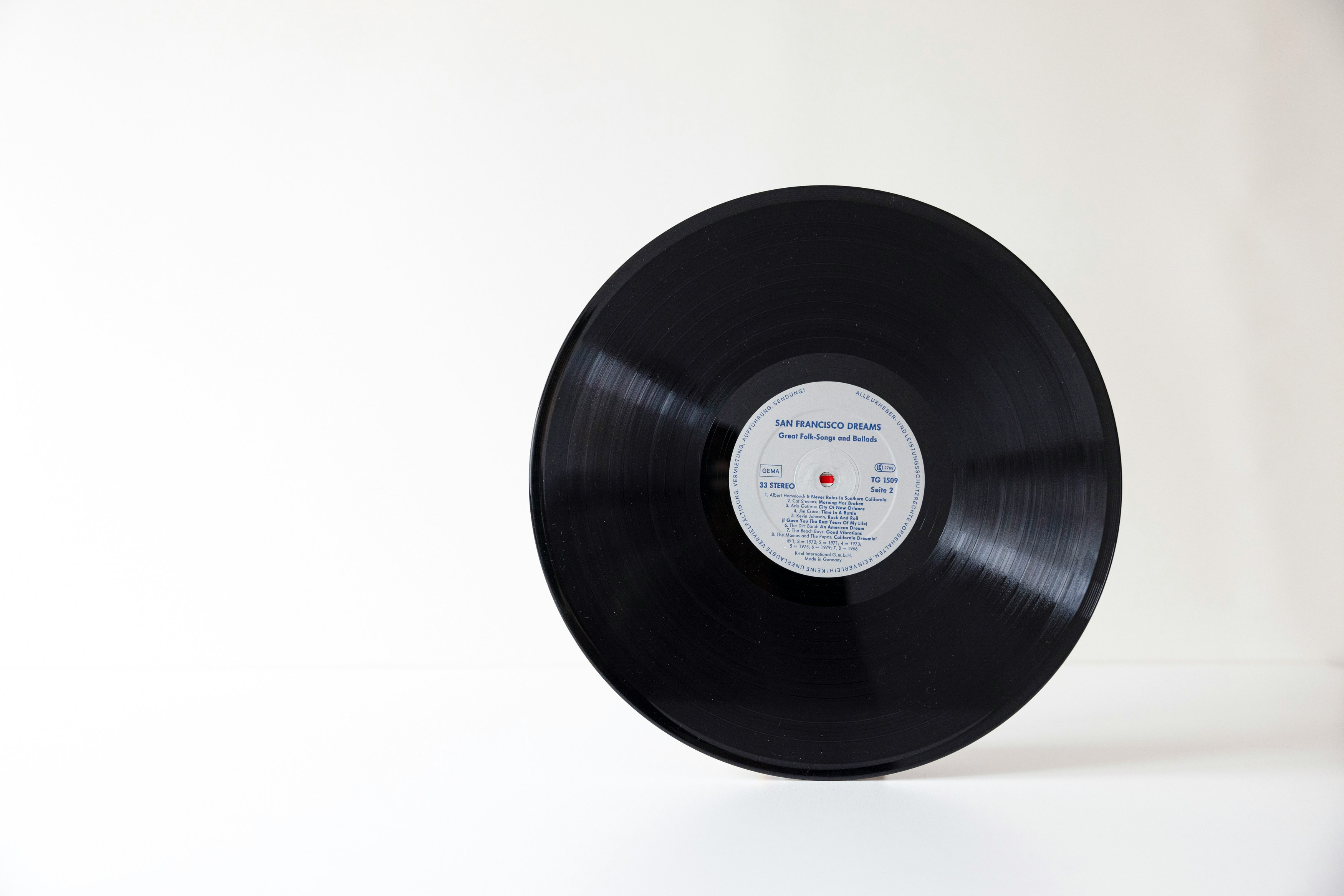
In 2024, vinyl outsold CDs for the second consecutive year. This is the first time that's happened since 1987.
More striking: These aren't just reissues of classic albums. New releases on vinyl are standard now. Taylor Swift's "The Tortured Poets Department" sold 859,000 vinyl copies in its first week (US data, Luminate).
Film Photography
Kodak's film sales:
2019: Kodak Alaris announced they'd run out of production capacity due to demand
2020: Reintroduced Ektachrome (discontinued in 2012)
2021: Increased manufacturing capacity by 25%
2024: Still unable to meet demand for certain stocks
Used film camera prices:
Hasselblad 500C/M (medium format): £800 in 2015 → £2,400 in 2024
Pentax 67: £600 in 2015 → £1,800 in 2024
Contax G2: £400 in 2015 → £1,200 in 2024
Fujifilm Instax sales:
2019: 10 million units
2023: 12.5 million units
Instant film is now a £1 billion global market
Risograph and Specialty Printing
Harder to quantify precisely (private companies, niche market), but observable indicators:
UK risograph studios:
2015: Approximately 12 known studios
2024: Over 60 studios and counting
Waiting times:
Hato Press (London): 8-12 week lead time for commercial work
Footprint Workers (Leeds): Workshops booked 6 months in advance
Risotto Studio (Manchester): Courses fully booked within hours of announcement
Equipment sales:
Riso, Inc. (Japan) reported increased sales in European markets 2020-2024
Used risograph machines have increased 200-300% in price since 2018
This is measurable, sustained growth across multiple analogue formats.
Why This Is Happening: Four Explanations
Let's examine the actual reasons driving this shift.
1. Digital Abundance Created a Scarcity Problem
The psychological research:
A 2023 study by Dr. Kristin Laurin (Stanford) examined how abundance affects perceived value. Key finding: "When identical items are infinitely available, individual items lose subjective worth."
What this means practically:
Spotify has 100 million songs. Any one song feels disposable. You skip after 15 seconds. You don't remember what you listened to yesterday.
A vinyl record is one physical object. You chose it. You paid £25-35 for it. You have to physically place it on the turntable. You're more likely to listen to the entire album, intentionally.
Photography comparison:
Digital: You take 500 photos on holiday. You look at maybe 20. You never print any. They sit in cloud storage you'll never open again.
Film: You have 36 exposures. Each shot costs roughly £1 after development and scanning. You think before pressing the shutter. You remember the photos you took.
The economic principle: Scarcity creates value. Digital destroyed scarcity. People are deliberately reintroducing it.
2. The Effort Heuristic in Action
Research from Harvard Business School (Norton, Mochon, Ariely, 2012) demonstrated the "IKEA effect": People value things more when they've put effort into them.
Extended research shows this applies to consumption, not just creation. When acquiring something requires effort, we value it more.
Examples:
Vinyl listening requires:
Choosing the album intentionally
Physical interaction (removing from sleeve, placing on turntable)
Sitting through the album (can't shuffle easily)
Flipping sides halfway through
Digital streaming requires:
Opening app
Tapping play
Film photography requires:
Loading film correctly (practice needed)
Manual focus and exposure (skill required)
Waiting days for results (delayed gratification)
Paying for mistakes (failed shots cost money)
Digital photography requires:
Pointing phone
Tapping screen
The effort differential creates psychological investment.
3. Imperfection as Signal
Research by Amos Tversky and Daniel Kahneman on heuristics showed humans use "representativeness" to judge authenticity. Perfect things trigger suspicion of artificiality.
Contemporary application:
AI-generated images are mathematically perfect:
Perfect lighting (ray-traced)
Perfect symmetry (algorithmic)
Perfect skin (no pores, no texture)
Perfect composition (trained on "ideal" examples)
Result: Increasingly, viewers can sense something is "off" even when they can't articulate why. The perfection itself becomes the tell.
Film photography has inherent imperfections:
Grain structure (varies by film stock)
Colour shifts (temperature variations during development)
Light leaks (mechanical imperfection)
Focus falloff (optical physics)
Dust and scratches (physical process)
Result: These "flaws" now signal authenticity. They prove a physical process occurred.
Design researcher Paul Hekkert (Delft University) found in 2021 studies that "minor imperfections in craft objects increased perceived value by 23-31% among design-literate audiences."
4. Sensory Poverty of Digital Experiences
Research from neuroscientist Rachel Herz (Brown University) on multisensory perception found that memory encoding increases significantly when multiple senses are engaged.
Digital engages primarily two senses:
Visual (screen)
Auditory (speakers/headphones)
Analogue engages four or five:
Vinyl records:
Visual: Large-format artwork, label design
Tactile: Weight of the record, texture of the sleeve, resistance of the platter
Auditory: Sound quality (debatable if "better," but definitely different)
Olfactory: Smell of vinyl (identifiable chemical scent)
Film photography:
Visual: The camera itself, the contact sheets
Tactile: Weight and mechanics of the camera, resistance of the shutter
Auditory: Shutter sound, film advance
Olfactory: Smell of fixer chemicals (if developing yourself)
Risograph printing:
Visual: Vibrant spot colours, visible registration
Tactile: Paper texture, ink impression
Olfactory: Soy-based ink smell
Multisensory experiences create stronger memories and emotional connections. This isn't subjective—it's measurable in neuroscience studies.
What Professional Creatives Are Actually Doing
Let's look at real-world applications.
Case Study 1: Tyler Mitchell (Photographer)
Tyler Mitchell became the first Black photographer to shoot a Vogue cover (Beyoncé, September 2018).
His working method:
Primarily shoots large format film (4x5" and 8x10")
Occasionally medium format (Hasselblad)
Digital only for client necessity or testing
Why, according to interviews:
In a 2021 British Journal of Photography interview, Mitchell explained: "Film forces me to slow down. I take maybe 20 shots for a final image instead of 2,000. The constraint makes me think harder about what I'm trying to say."
Result: His work is immediately recognisable. The deliberate pacing shows in the images.
Case Study 2: Hato Press (Risograph Studio, London)
Founded 2014. Now one of the UK's most respected risograph studios.
What they've observed:
In a 2023 Creative Review interview, co-founder Lawrence Whittle noted: "We thought risograph would be a novelty. Instead, we've seen consistent 40% year-over-year growth. Clients aren't coming for nostalgia—they're coming because the aesthetic is genuinely different from digital printing."
Client list includes:
Somerset House
Barbican Centre
Tate Modern
Major fashion brands for limited releases
Why clients choose risograph over digital:
Unique colour vibrancy (spot colours, not CMYK)
Each print has subtle variation (impossible to mass-produce identically)
Texture and tactility
Environmental considerations (soy-based inks, often recycled paper)
Case Study 3: Rough Trade Records (Vinyl Retail)
Independent record shop chain, founded 1976.
Their experience:
Closed several shops during digital music peak (2000s)
2010s: Vinyl resurgence begins
2020-2024: Opened new locations (East London, Bristol, New York)
What they attribute growth to:
According to their 2023 annual review: "Vinyl buyers aren't just buying music—they're buying physical objects, artwork, liner notes, the ritual of listening. It's experiential consumption, not just audio consumption."
Demographics shift:
2015: Majority of vinyl buyers were 45+
2024: 40% of vinyl buyers are under 35
This isn't older people clinging to the past. It's younger people actively choosing physical media.
The Commercial Reality: Does Analogue Make Economic Sense?
Let's examine costs honestly.
Film Photography Economics
Equipment:
Used medium format camera (Hasselblad 500C/M): £2,000-£2,800
Lenses: £400-£1,200 each
Light meter: £150-£400
Per-shoot costs:
Medium format film (120): £8-£12 per roll (12-16 shots)
Development: £8-£15 per roll
High-resolution scanning: £8-£20 per roll
Cost per shot: £2-£4
Compare to digital:
Professional digital camera: £3,000-£6,000 (one-time)
Per-shot cost: Essentially £0
Can shoot 2,000+ images per session
Why photographers still shoot film:
Not because it's cheaper (it's not). But because:
It forces discipline (expensive mistakes make you more careful)
Clients recognise and value the aesthetic
Differentiation in a crowded market
Some clients specifically request film for the look
Professional photographer testimony:
Jamie Hawkesworth (shoots for JW Anderson, Loewe) told The Guardian (2022): "I could shoot the same campaign on digital for a third of the cost. But the client books me specifically because I shoot film. It's part of the creative brief, not a technical decision."
Risograph Economics
Equipment:
Used risograph machine: £3,000-£8,000
Ink drums: £80-£150 per colour
Maintenance: £500-£1,500 annually
Per-print costs (A3 size, 2 colours):
Setup: £40-£80
Per-print: £1.50-£3.00
Minimum run typically: 50-100 prints
Compare to digital printing:
A3, 2 colours, 100 prints: £150-£250
Per-print after setup: £0.50-£1.00
Why designers choose risograph:
Unique aesthetic (digital can't replicate the colour vibrancy and texture)
Each print has variation (not identical copies)
Sustainable credentials (soy inks, less waste than offset)
Clients value the craft and differentiation
When It Makes Financial Sense
Analogue processes make economic sense when:
Differentiation justifies premium pricing
Your work needs to stand out visually
Clients are willing to pay for unique aesthetic
The process itself is part of the value proposition
Edition size is appropriate
Small runs (50-500) where uniqueness matters
Not mass production where unit cost is critical
Client understands and values the process
Educated clients who recognise the difference
Premium brands where craft matters
Cultural institutions where artistic credibility is essential
When it doesn't make sense:
Mass production (thousands+ copies)
Price-sensitive clients
Rush timelines (analogue is slower)
Projects where consistency is paramount
What This Means for Working Creatives
Practical considerations if you're thinking about incorporating analogue processes.
Starting with Film Photography
If you're a photographer:
Don't: Buy expensive equipment immediately
Do: Rent or borrow to test if you actually enjoy the process
Start with:
35mm SLR (Canon AE-1, Pentax K1000, Nikon FM2) - £150-£300
One prime lens (50mm f/1.8) - £50-£150
Basic light meter - £50-£100
Shoot 10-20 rolls before deciding to invest more
Learn from:
r/analog (Reddit community with 1.4M members)
Film Photography Project (podcast and resources)
Local film labs often offer workshops
Starting with Risograph
If you're a designer:
Don't: Buy a machine (unless you're certain about volume)
Do: Work with existing riso studios to learn the process
Find studios via:
We Are Riso (global directory)
Local art colleges (many have risographs)
Independent print studios
Understand:
Design specifically for riso (limited colours, spot colour thinking)
Registration shifts are feature, not bug
Paper choice dramatically affects results
Minimum runs usually 50-100 to be cost-effective
Starting with Vinyl (If You're a Musician)
Economic reality:
Vinyl pressing requires:
Minimum runs: 300-500 units typical
Cost: £3-£5 per unit at volume
Upfront investment: £1,500-£2,500
Only makes sense if:
You have audience willing to buy physical
You're comfortable with upfront investment
You view it as marketing/brand building, not pure revenue
Alternative:
Lathe-cut singles (1-50 units possible)
More expensive per-unit, but no minimum quantity
Good for testing market before full pressing
The Cultural Context: Why Now?
Why is this happening in 2024-2026 specifically?
1. AI Made Perfect Too Easy
The timeline:
2022: DALL-E 2, Midjourney become widely accessible
2023: Generative AI explodes (ChatGPT, image generation everywhere)
2024: AI-generated imagery is ubiquitous
The reaction:
When anyone can generate a perfect image in 30 seconds, what's the value of perfect?
Analogue processes offer something AI can't easily replicate: evidence of physical process, human decision-making, and material reality.
2. Screen Fatigue
Research from Dr. Gloria Mark (UC Irvine) on digital attention found average screen time:
2019: 6.5 hours daily
2020-2021: Jumped to 10+ hours (pandemic)
2024: Settled at 8-9 hours for knowledge workers
The backlash:
People are actively seeking non-screen experiences. Physical media offers genuine respite from digital saturation.
3. Sustainability Concerns
Growing awareness:
Data centres consume 1-2% of global electricity
Streaming one hour of video: 36g CO2
Manufacturing one smartphone: 80kg CO2
Analogue alternative:
Vinyl record manufacturing: ~0.5kg CO2 per unit
Lasts decades with proper care
No ongoing energy consumption for playback
Note: This isn't universally true (film chemistry has environmental costs), but the perception of physical media as more sustainable is growing.
The Likely Future
Based on current trends, what's realistic?
What Won't Happen
Analogue won't replace digital. That's not happening. Digital tools are too efficient, too versatile, too economically necessary.
This isn't a full regression. The 2020s won't look like the 1970s.
What Will Happen
Hybrid approaches will become standard:
Shoot on film, deliver digitally
Design for riso, distribute as PDFs
Press vinyl, also release on streaming
Analogue as premium tier:
Digital as standard/accessible version
Physical as collectors'/premium version
Price stratification based on format
Increased demand for specialists:
Film developers who understand different stocks
Risograph operators who can colour-match
Vinyl mastering engineers who understand the format's limitations
Education incorporation:
Art schools increasingly teaching analogue alongside digital
Recognition that understanding historical processes informs contemporary work
Conclusion: Not Nostalgia, But Deliberate Choice
The analogue renaissance isn't about the past. It's about choosing constraints.
Digital offers infinite possibilities. Analogue offers productive limitations.
Digital offers perfect replication. Analogue offers intentional variation.
Digital offers efficiency. Analogue offers ritual.
Both have value. The question is knowing when each is appropriate.
For creatives, the lesson isn't "abandon digital." It's "understand what different processes offer, and choose deliberately."
Sometimes the brief needs digital efficiency. Sometimes it needs analogue craft.
The best work often comes from knowing the difference.
Something strange is happening in creative industries.
Whilst AI generates perfect images in seconds and digital tools promise infinite efficiency, designers are buying film cameras. Photographers are shooting on expired Kodak stock. Print studios are installing 1980s risograph machines.
This isn't nostalgia. It's a deliberate choice.
And understanding why requires looking at what digital abundance actually did to creative work.
The Numbers: What's Actually Growing
Let's start with data, not assumptions.
Vinyl Records
UK vinyl sales (BPI/ERA data):
2015: 2.1 million units
2020: 4.8 million units
2023: 5.9 million units
2024: 6.1 million units
In 2024, vinyl outsold CDs for the second consecutive year. This is the first time that's happened since 1987.
More striking: These aren't just reissues of classic albums. New releases on vinyl are standard now. Taylor Swift's "The Tortured Poets Department" sold 859,000 vinyl copies in its first week (US data, Luminate).
Film Photography
Kodak's film sales:
2019: Kodak Alaris announced they'd run out of production capacity due to demand
2020: Reintroduced Ektachrome (discontinued in 2012)
2021: Increased manufacturing capacity by 25%
2024: Still unable to meet demand for certain stocks
Used film camera prices:
Hasselblad 500C/M (medium format): £800 in 2015 → £2,400 in 2024
Pentax 67: £600 in 2015 → £1,800 in 2024
Contax G2: £400 in 2015 → £1,200 in 2024
Fujifilm Instax sales:
2019: 10 million units
2023: 12.5 million units
Instant film is now a £1 billion global market
Risograph and Specialty Printing
Harder to quantify precisely (private companies, niche market), but observable indicators:
UK risograph studios:
2015: Approximately 12 known studios
2024: Over 60 studios and counting
Waiting times:
Hato Press (London): 8-12 week lead time for commercial work
Footprint Workers (Leeds): Workshops booked 6 months in advance
Risotto Studio (Manchester): Courses fully booked within hours of announcement
Equipment sales:
Riso, Inc. (Japan) reported increased sales in European markets 2020-2024
Used risograph machines have increased 200-300% in price since 2018
This is measurable, sustained growth across multiple analogue formats.
Why This Is Happening: Four Explanations
Let's examine the actual reasons driving this shift.
1. Digital Abundance Created a Scarcity Problem
The psychological research:
A 2023 study by Dr. Kristin Laurin (Stanford) examined how abundance affects perceived value. Key finding: "When identical items are infinitely available, individual items lose subjective worth."
What this means practically:
Spotify has 100 million songs. Any one song feels disposable. You skip after 15 seconds. You don't remember what you listened to yesterday.
A vinyl record is one physical object. You chose it. You paid £25-35 for it. You have to physically place it on the turntable. You're more likely to listen to the entire album, intentionally.
Photography comparison:
Digital: You take 500 photos on holiday. You look at maybe 20. You never print any. They sit in cloud storage you'll never open again.
Film: You have 36 exposures. Each shot costs roughly £1 after development and scanning. You think before pressing the shutter. You remember the photos you took.
The economic principle: Scarcity creates value. Digital destroyed scarcity. People are deliberately reintroducing it.
2. The Effort Heuristic in Action
Research from Harvard Business School (Norton, Mochon, Ariely, 2012) demonstrated the "IKEA effect": People value things more when they've put effort into them.
Extended research shows this applies to consumption, not just creation. When acquiring something requires effort, we value it more.
Examples:
Vinyl listening requires:
Choosing the album intentionally
Physical interaction (removing from sleeve, placing on turntable)
Sitting through the album (can't shuffle easily)
Flipping sides halfway through
Digital streaming requires:
Opening app
Tapping play
Film photography requires:
Loading film correctly (practice needed)
Manual focus and exposure (skill required)
Waiting days for results (delayed gratification)
Paying for mistakes (failed shots cost money)
Digital photography requires:
Pointing phone
Tapping screen
The effort differential creates psychological investment.
3. Imperfection as Signal
Research by Amos Tversky and Daniel Kahneman on heuristics showed humans use "representativeness" to judge authenticity. Perfect things trigger suspicion of artificiality.
Contemporary application:
AI-generated images are mathematically perfect:
Perfect lighting (ray-traced)
Perfect symmetry (algorithmic)
Perfect skin (no pores, no texture)
Perfect composition (trained on "ideal" examples)
Result: Increasingly, viewers can sense something is "off" even when they can't articulate why. The perfection itself becomes the tell.
Film photography has inherent imperfections:
Grain structure (varies by film stock)
Colour shifts (temperature variations during development)
Light leaks (mechanical imperfection)
Focus falloff (optical physics)
Dust and scratches (physical process)
Result: These "flaws" now signal authenticity. They prove a physical process occurred.
Design researcher Paul Hekkert (Delft University) found in 2021 studies that "minor imperfections in craft objects increased perceived value by 23-31% among design-literate audiences."
4. Sensory Poverty of Digital Experiences
Research from neuroscientist Rachel Herz (Brown University) on multisensory perception found that memory encoding increases significantly when multiple senses are engaged.
Digital engages primarily two senses:
Visual (screen)
Auditory (speakers/headphones)
Analogue engages four or five:
Vinyl records:
Visual: Large-format artwork, label design
Tactile: Weight of the record, texture of the sleeve, resistance of the platter
Auditory: Sound quality (debatable if "better," but definitely different)
Olfactory: Smell of vinyl (identifiable chemical scent)
Film photography:
Visual: The camera itself, the contact sheets
Tactile: Weight and mechanics of the camera, resistance of the shutter
Auditory: Shutter sound, film advance
Olfactory: Smell of fixer chemicals (if developing yourself)
Risograph printing:
Visual: Vibrant spot colours, visible registration
Tactile: Paper texture, ink impression
Olfactory: Soy-based ink smell
Multisensory experiences create stronger memories and emotional connections. This isn't subjective—it's measurable in neuroscience studies.
What Professional Creatives Are Actually Doing
Let's look at real-world applications.
Case Study 1: Tyler Mitchell (Photographer)
Tyler Mitchell became the first Black photographer to shoot a Vogue cover (Beyoncé, September 2018).
His working method:
Primarily shoots large format film (4x5" and 8x10")
Occasionally medium format (Hasselblad)
Digital only for client necessity or testing
Why, according to interviews:
In a 2021 British Journal of Photography interview, Mitchell explained: "Film forces me to slow down. I take maybe 20 shots for a final image instead of 2,000. The constraint makes me think harder about what I'm trying to say."
Result: His work is immediately recognisable. The deliberate pacing shows in the images.
Case Study 2: Hato Press (Risograph Studio, London)
Founded 2014. Now one of the UK's most respected risograph studios.
What they've observed:
In a 2023 Creative Review interview, co-founder Lawrence Whittle noted: "We thought risograph would be a novelty. Instead, we've seen consistent 40% year-over-year growth. Clients aren't coming for nostalgia—they're coming because the aesthetic is genuinely different from digital printing."
Client list includes:
Somerset House
Barbican Centre
Tate Modern
Major fashion brands for limited releases
Why clients choose risograph over digital:
Unique colour vibrancy (spot colours, not CMYK)
Each print has subtle variation (impossible to mass-produce identically)
Texture and tactility
Environmental considerations (soy-based inks, often recycled paper)
Case Study 3: Rough Trade Records (Vinyl Retail)
Independent record shop chain, founded 1976.
Their experience:
Closed several shops during digital music peak (2000s)
2010s: Vinyl resurgence begins
2020-2024: Opened new locations (East London, Bristol, New York)
What they attribute growth to:
According to their 2023 annual review: "Vinyl buyers aren't just buying music—they're buying physical objects, artwork, liner notes, the ritual of listening. It's experiential consumption, not just audio consumption."
Demographics shift:
2015: Majority of vinyl buyers were 45+
2024: 40% of vinyl buyers are under 35
This isn't older people clinging to the past. It's younger people actively choosing physical media.
The Commercial Reality: Does Analogue Make Economic Sense?
Let's examine costs honestly.
Film Photography Economics
Equipment:
Used medium format camera (Hasselblad 500C/M): £2,000-£2,800
Lenses: £400-£1,200 each
Light meter: £150-£400
Per-shoot costs:
Medium format film (120): £8-£12 per roll (12-16 shots)
Development: £8-£15 per roll
High-resolution scanning: £8-£20 per roll
Cost per shot: £2-£4
Compare to digital:
Professional digital camera: £3,000-£6,000 (one-time)
Per-shot cost: Essentially £0
Can shoot 2,000+ images per session
Why photographers still shoot film:
Not because it's cheaper (it's not). But because:
It forces discipline (expensive mistakes make you more careful)
Clients recognise and value the aesthetic
Differentiation in a crowded market
Some clients specifically request film for the look
Professional photographer testimony:
Jamie Hawkesworth (shoots for JW Anderson, Loewe) told The Guardian (2022): "I could shoot the same campaign on digital for a third of the cost. But the client books me specifically because I shoot film. It's part of the creative brief, not a technical decision."
Risograph Economics
Equipment:
Used risograph machine: £3,000-£8,000
Ink drums: £80-£150 per colour
Maintenance: £500-£1,500 annually
Per-print costs (A3 size, 2 colours):
Setup: £40-£80
Per-print: £1.50-£3.00
Minimum run typically: 50-100 prints
Compare to digital printing:
A3, 2 colours, 100 prints: £150-£250
Per-print after setup: £0.50-£1.00
Why designers choose risograph:
Unique aesthetic (digital can't replicate the colour vibrancy and texture)
Each print has variation (not identical copies)
Sustainable credentials (soy inks, less waste than offset)
Clients value the craft and differentiation
When It Makes Financial Sense
Analogue processes make economic sense when:
Differentiation justifies premium pricing
Your work needs to stand out visually
Clients are willing to pay for unique aesthetic
The process itself is part of the value proposition
Edition size is appropriate
Small runs (50-500) where uniqueness matters
Not mass production where unit cost is critical
Client understands and values the process
Educated clients who recognise the difference
Premium brands where craft matters
Cultural institutions where artistic credibility is essential
When it doesn't make sense:
Mass production (thousands+ copies)
Price-sensitive clients
Rush timelines (analogue is slower)
Projects where consistency is paramount
What This Means for Working Creatives
Practical considerations if you're thinking about incorporating analogue processes.
Starting with Film Photography
If you're a photographer:
Don't: Buy expensive equipment immediately
Do: Rent or borrow to test if you actually enjoy the process
Start with:
35mm SLR (Canon AE-1, Pentax K1000, Nikon FM2) - £150-£300
One prime lens (50mm f/1.8) - £50-£150
Basic light meter - £50-£100
Shoot 10-20 rolls before deciding to invest more
Learn from:
r/analog (Reddit community with 1.4M members)
Film Photography Project (podcast and resources)
Local film labs often offer workshops
Starting with Risograph
If you're a designer:
Don't: Buy a machine (unless you're certain about volume)
Do: Work with existing riso studios to learn the process
Find studios via:
We Are Riso (global directory)
Local art colleges (many have risographs)
Independent print studios
Understand:
Design specifically for riso (limited colours, spot colour thinking)
Registration shifts are feature, not bug
Paper choice dramatically affects results
Minimum runs usually 50-100 to be cost-effective
Starting with Vinyl (If You're a Musician)
Economic reality:
Vinyl pressing requires:
Minimum runs: 300-500 units typical
Cost: £3-£5 per unit at volume
Upfront investment: £1,500-£2,500
Only makes sense if:
You have audience willing to buy physical
You're comfortable with upfront investment
You view it as marketing/brand building, not pure revenue
Alternative:
Lathe-cut singles (1-50 units possible)
More expensive per-unit, but no minimum quantity
Good for testing market before full pressing
The Cultural Context: Why Now?
Why is this happening in 2024-2026 specifically?
1. AI Made Perfect Too Easy
The timeline:
2022: DALL-E 2, Midjourney become widely accessible
2023: Generative AI explodes (ChatGPT, image generation everywhere)
2024: AI-generated imagery is ubiquitous
The reaction:
When anyone can generate a perfect image in 30 seconds, what's the value of perfect?
Analogue processes offer something AI can't easily replicate: evidence of physical process, human decision-making, and material reality.
2. Screen Fatigue
Research from Dr. Gloria Mark (UC Irvine) on digital attention found average screen time:
2019: 6.5 hours daily
2020-2021: Jumped to 10+ hours (pandemic)
2024: Settled at 8-9 hours for knowledge workers
The backlash:
People are actively seeking non-screen experiences. Physical media offers genuine respite from digital saturation.
3. Sustainability Concerns
Growing awareness:
Data centres consume 1-2% of global electricity
Streaming one hour of video: 36g CO2
Manufacturing one smartphone: 80kg CO2
Analogue alternative:
Vinyl record manufacturing: ~0.5kg CO2 per unit
Lasts decades with proper care
No ongoing energy consumption for playback
Note: This isn't universally true (film chemistry has environmental costs), but the perception of physical media as more sustainable is growing.
The Likely Future
Based on current trends, what's realistic?
What Won't Happen
Analogue won't replace digital. That's not happening. Digital tools are too efficient, too versatile, too economically necessary.
This isn't a full regression. The 2020s won't look like the 1970s.
What Will Happen
Hybrid approaches will become standard:
Shoot on film, deliver digitally
Design for riso, distribute as PDFs
Press vinyl, also release on streaming
Analogue as premium tier:
Digital as standard/accessible version
Physical as collectors'/premium version
Price stratification based on format
Increased demand for specialists:
Film developers who understand different stocks
Risograph operators who can colour-match
Vinyl mastering engineers who understand the format's limitations
Education incorporation:
Art schools increasingly teaching analogue alongside digital
Recognition that understanding historical processes informs contemporary work
Conclusion: Not Nostalgia, But Deliberate Choice
The analogue renaissance isn't about the past. It's about choosing constraints.
Digital offers infinite possibilities. Analogue offers productive limitations.
Digital offers perfect replication. Analogue offers intentional variation.
Digital offers efficiency. Analogue offers ritual.
Both have value. The question is knowing when each is appropriate.
For creatives, the lesson isn't "abandon digital." It's "understand what different processes offer, and choose deliberately."
Sometimes the brief needs digital efficiency. Sometimes it needs analogue craft.
The best work often comes from knowing the difference.