Nobody Does Their Best Work at Their Desk
Nobody Does Their Best Work at Their Desk
The environmental psychology behind why a noisy café produces better thinking than a silent office.
The environmental psychology behind why a noisy café produces better thinking than a silent office.
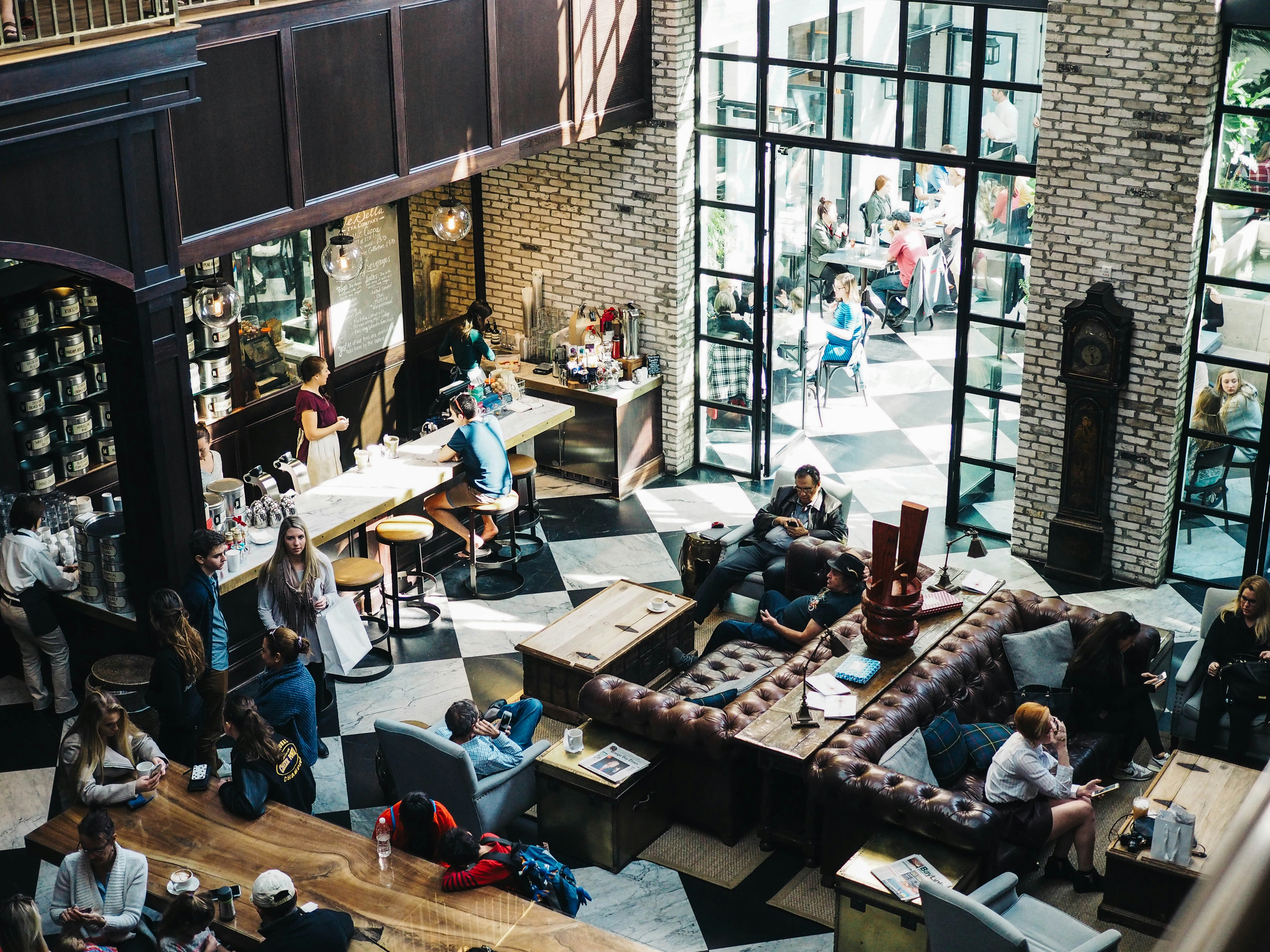
There is a specific mental state that arrives about twenty minutes into a coffee shop session.
The surrounding noise blurs into something undifferentiated. The low hum of conversation, the clatter of cups, the indistinct background music. It stops being distracting and starts being clarifying. The work in front of you sharpens. Time moves differently.
This is not the caffeine. The caffeine is almost beside the point.
What 70 Decibels Actually Does.
Researchers at the University of Illinois found that ambient noise at approximately 70 decibels, the typical volume of a busy café, produces a measurable increase in creative cognitive performance compared to both silence and loud environments.
The mechanism is counterintuitive. A moderate level of ambient noise induces a slight processing constraint. The brain cannot fully track every individual sound, so it stops trying. This partial cognitive load prevents the mind from collapsing inward into distraction or self-interruption, which is what silence frequently produces for people doing creative work.
The result is a state of diffuse attention. Present enough to think. Removed enough from internal noise to think well.
"The café does not eliminate distraction. It provides better distraction, at the right volume, in the right direction."
Low-Stakes Social Presence.
The noise alone does not explain it entirely.
The coffee shop offers something the home office and the studio cannot: the sensation of being among people without any obligation to those people. Nobody in that room requires anything from you. There are no meetings to attend, no colleagues to acknowledge, no social contract beyond ordering occasionally and not taking up too much space.
Psychologists call this low-stakes social presence. The feeling of being witnessed, even anonymously, produces a mild accountability effect. You are less likely to open a distraction when someone, even a stranger, is physically nearby. The ambient social context creates just enough external structure to keep the work moving.
This is entirely distinct from working with colleagues, which carries social weight, relational dynamics, and the ever-present possibility of being interrupted.
The stranger across the table is the perfect collaborator. They expect absolutely nothing.
Why the Office Gets This Wrong.
Open plan offices sit at the worst possible intersection of these variables.
Too loud to think clearly. Too socially loaded to feel anonymous. Full of people who do have legitimate claims on your attention and the proximity to act on them.
The coffee shop is not a better office. It is a different environmental condition that produces a different cognitive state. Organisations that dismiss it as an avoidance behaviour are misreading what their employees are actually optimising for.
What This Means in Practice.
The studios paying attention to environmental psychology are not just offering remote working flexibility as a perk.
They are acknowledging something more specific: that creative output is a function of cognitive state, and cognitive state is a function of environment. Matching the environment to the type of thinking required is not a lifestyle choice.
It is a design decision.
And the right design, even when it involves a flat white and a corner seat, tends to produce better work than the wrong one with better lighting.
There is a specific mental state that arrives about twenty minutes into a coffee shop session.
The surrounding noise blurs into something undifferentiated. The low hum of conversation, the clatter of cups, the indistinct background music. It stops being distracting and starts being clarifying. The work in front of you sharpens. Time moves differently.
This is not the caffeine. The caffeine is almost beside the point.
What 70 Decibels Actually Does.
Researchers at the University of Illinois found that ambient noise at approximately 70 decibels, the typical volume of a busy café, produces a measurable increase in creative cognitive performance compared to both silence and loud environments.
The mechanism is counterintuitive. A moderate level of ambient noise induces a slight processing constraint. The brain cannot fully track every individual sound, so it stops trying. This partial cognitive load prevents the mind from collapsing inward into distraction or self-interruption, which is what silence frequently produces for people doing creative work.
The result is a state of diffuse attention. Present enough to think. Removed enough from internal noise to think well.
"The café does not eliminate distraction. It provides better distraction, at the right volume, in the right direction."
Low-Stakes Social Presence.
The noise alone does not explain it entirely.
The coffee shop offers something the home office and the studio cannot: the sensation of being among people without any obligation to those people. Nobody in that room requires anything from you. There are no meetings to attend, no colleagues to acknowledge, no social contract beyond ordering occasionally and not taking up too much space.
Psychologists call this low-stakes social presence. The feeling of being witnessed, even anonymously, produces a mild accountability effect. You are less likely to open a distraction when someone, even a stranger, is physically nearby. The ambient social context creates just enough external structure to keep the work moving.
This is entirely distinct from working with colleagues, which carries social weight, relational dynamics, and the ever-present possibility of being interrupted.
The stranger across the table is the perfect collaborator. They expect absolutely nothing.
Why the Office Gets This Wrong.
Open plan offices sit at the worst possible intersection of these variables.
Too loud to think clearly. Too socially loaded to feel anonymous. Full of people who do have legitimate claims on your attention and the proximity to act on them.
The coffee shop is not a better office. It is a different environmental condition that produces a different cognitive state. Organisations that dismiss it as an avoidance behaviour are misreading what their employees are actually optimising for.
What This Means in Practice.
The studios paying attention to environmental psychology are not just offering remote working flexibility as a perk.
They are acknowledging something more specific: that creative output is a function of cognitive state, and cognitive state is a function of environment. Matching the environment to the type of thinking required is not a lifestyle choice.
It is a design decision.
And the right design, even when it involves a flat white and a corner seat, tends to produce better work than the wrong one with better lighting.